Why Most People Give Up on Their Dreams — And What Jim Rohn Said About Staying the Course
Written based on the teachings of Jim Rohn
My friend, let me ask you a question that Jim Rohn asked thousands of people over the course of his career.
Why do most people quit?
Not why do they fail — failure is a teacher, and Jim respected it. The question is why do they quit? Why do they walk away from something they once wanted badly enough to start? Why do they abandon the dream that, six months ago, kept them awake with excitement?
Jim had an answer. And like most of his answers, it was simple, honest, and a little uncomfortable.
Winter Always Comes
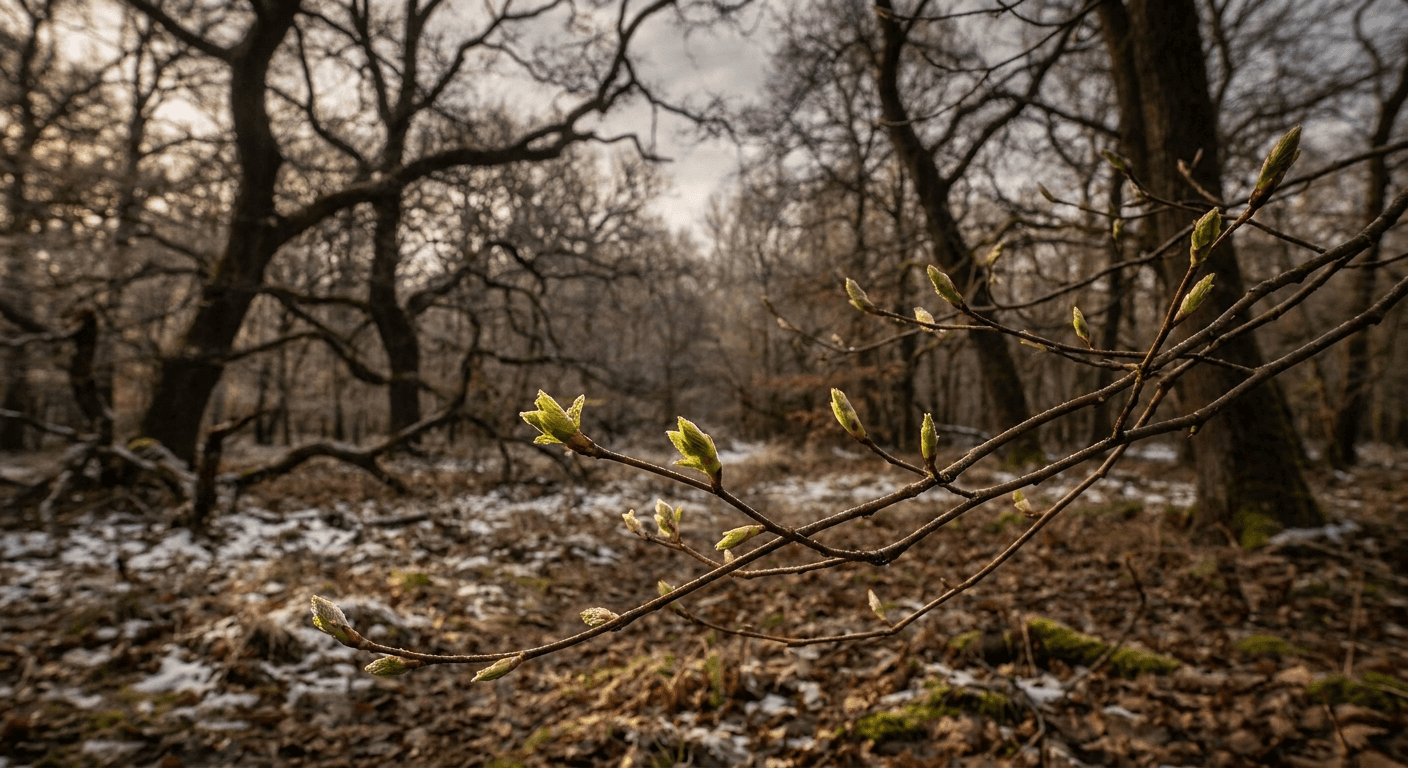
Jim loved to talk about the seasons. Not just because he grew up on a farm in Idaho, but because the seasons were, to him, the most honest metaphor for how life actually works.
Spring is exciting. Summer is productive. Fall is rewarding. But winter? Winter is when most people quit.
Jim taught that the seasons of life are predictable. Not the specific events — nobody can predict exactly when hardship will arrive — but the pattern. Winter always comes. Always. There has never been a year without winter, and there has never been a life without difficulty.
The problem, Jim said, is not that winter comes. The problem is that most people are surprised by it. They plant their seeds in spring with great enthusiasm. They work through summer with determination. They begin to see results in early fall. And then winter shows up — a setback, a failure, a disappointment, an economy that turns, a relationship that breaks, a plan that falls apart — and they act as if something went terribly wrong.
But nothing went wrong. It is just winter. And winter, as Jim reminded us, is not the end of the story. It is simply a season. It passes. But only if you do not quit while it is here.
The Pain of Discipline vs. the Pain of Regret
Jim said something that has echoed through the decades, and it is worth sitting with tonight.
"We must all suffer from one of two pains: the pain of discipline or the pain of regret. The difference is discipline weighs ounces while regret weighs tons."
Most people give up on their dreams because discipline is uncomfortable right now. It asks you to get up early when the bed is warm. It asks you to study when your friends are relaxing. It asks you to say no to something easy so you can say yes to something meaningful. Discipline, in the moment, feels heavy.
But Jim knew — and he taught this with everything he had — that discipline is a feather compared to regret. Regret is the weight you carry at fifty when you realize you gave up at thirty. Regret is the voice that says, "I could have. I should have. I almost did." Regret is the heaviest thing a human being can carry because you cannot put it down.
The people who stay the course are not people who never feel the pull to quit. They feel it. Of course they feel it. They are human. But they have learned to measure the pain correctly. They ask themselves, "Which pain do I want? The temporary ache of doing something difficult, or the permanent ache of knowing I walked away?"
Jim made that calculation at twenty-five. He chose discipline. And that choice defined the rest of his life.
Don't Give Up What You Want Most for What You Want Right Now
Here is another truth Jim carried, and it is one of the most practical things he ever taught.
Most people do not quit because they no longer want the dream. They quit because they want something else more — right now. They want comfort right now. They want approval right now. They want certainty right now. And the dream, whatever it is, does not offer any of those things right now. The dream offers them later, after the work, after the growth, after the winter.
Jim put it plainly: "Don't give up what you want most for what you want right now."
Think about that, my friend. How many times have you traded a long-term vision for a short-term comfort? How many times have you said, "I will get back to it next week," knowing full well that next week would bring the same temptation to delay?
Jim was not harsh about this. He did not wag his finger. He understood the pull. He felt it himself when he was young and struggling. But he also knew that understanding the pull is not the same as surrendering to it. You can feel the desire for comfort and still choose the work. You can feel the urge to quit and still take one more step.
The people who achieve their dreams are not superhuman. They are simply people who, in the critical moment, chose what they wanted most over what they wanted right now.
The Seasons Are Predictable — But You Must Prepare
Here is what Jim taught about staying the course: you must prepare for winter while it is still summer.
A wise farmer does not wait until the first frost to think about winter. A wise farmer spends the warm months storing up supplies, strengthening the barn, putting away resources for the lean time ahead. The farmer knows winter is coming. The farmer does not pretend otherwise. And because the farmer prepares, the farmer survives.
Jim applied this directly to life. When things are going well — when you are in your summer or fall — that is the time to build your reserves. Read the books. Develop the skills. Save the money. Strengthen the relationships. Build the habits that will sustain you when the cold comes.
Because if you wait until winter to start preparing, you are already too late. The person who reads only when they feel inspired will stop reading the moment inspiration fades. The person who saves only when it is easy will have nothing when it gets hard. The person who works on their dream only when circumstances are favorable will abandon it the first time circumstances turn.
Jim often said, "Don't just learn the tricks of the trade. Learn the trade." What he meant was: do not look for shortcuts. Build the real thing. Build it so strong that when winter blows, the foundation holds.
The Story of the Bamboo
Jim loved a particular story about the Chinese bamboo tree. He told it many times, and each time it landed with fresh force.
You plant a Chinese bamboo seed. You water it. You fertilize it. You tend to it. And for the first year, nothing happens. No visible growth. No sprout. Nothing.
So you keep watering. Second year — nothing. Third year — nothing. Fourth year — still nothing. Four years of daily discipline, and you have nothing to show for it. Nothing you can point to. Nothing you can measure. Nothing that would impress anybody looking from the outside.
And then, in the fifth year, the Chinese bamboo grows eighty feet in six weeks.
Jim would pause after telling that story and ask, "Did the tree grow eighty feet in six weeks? Or did it grow eighty feet in five years?"
The answer, of course, is five years. Because all that time, while nothing was visible on the surface, the roots were growing. Spreading. Strengthening. Building the foundation for an explosion of growth that would be impossible without those years of invisible progress.
My friend, that is what staying the course looks like. It looks like watering a tree that has not sprouted yet. It looks like doing the work when there is no applause, no results, no evidence that it is working. It looks like choosing faith over frustration and consistency over spectacle.
Most people quit somewhere around year two or three of the bamboo cycle. They look at the ground, see nothing, and walk away. And they never know how close they were.
What Jim Would Say to You Right Now
If Jim were sitting across from you tonight, here is what he would want you to hear.
He would say that the dream you are carrying is worth the struggle. He would say that winter is not a sign that you chose the wrong path — it is a sign that you chose a real one, because real paths have real seasons.
He would remind you that discipline weighs ounces and regret weighs tons, and that the choice between them is yours to make every single day.
He would tell you not to give up what you want most for what you want right now. Not today. Not this week. Not ever.
And he would tell you to prepare. Read the books. Do the work. Surround yourself with people who fuel your fire instead of people who pour water on it. Build such a strong foundation that when the next winter arrives — and it will — you are ready.
Because the seasons are not your enemy, my friend. The seasons are your teacher. And the people who learn from them, who respect them, who endure them with patience and discipline — those are the people who eventually stand in fall with a harvest they can be proud of.
Jim knew that. He lived that. And he believed, with every fiber of who he was, that you can live it too.
Stay the course.
Continue Reading
More from Jim Rohn's teachings
The Courage to Dream Bigger Than Your Circumstances
Make a Living or Design a Life — The Choice That Changes Everything

The Summer Season of Life: Why Protecting Your Progress Is Harder Than Starting

Life Responds to Deserve: Why Earning Beats Wishing Every Time
Subscribe to the Jim Rohn Newsletter
Join our community receiving weekly wisdom for a better life.